The Problem
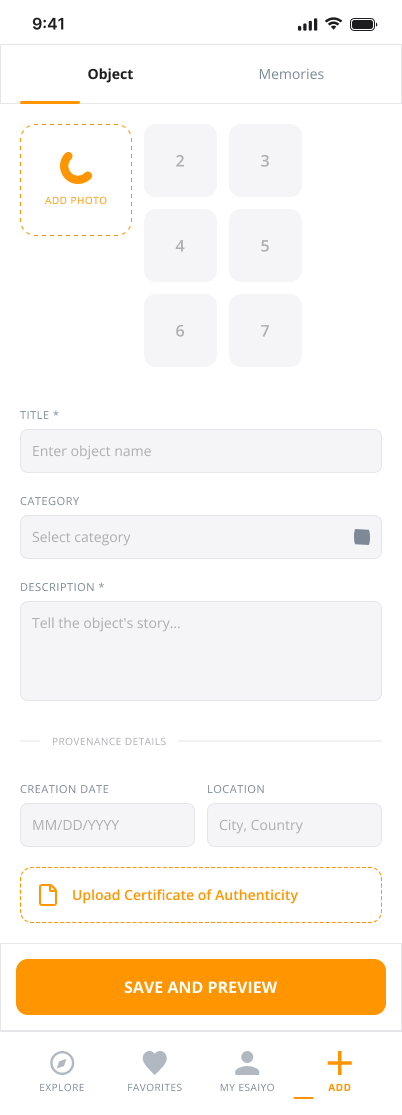
Esaiyo wanted a unified digital experience for objects that had nothing in common structurally — a physical antique, a conceptual artwork, a digital file — with no established design conventions to borrow from. Worse, the user base split just as unevenly: professional archivists and historians on one end, casual collectors on the other, each carrying a fundamentally different mental model of what an “object” even was.
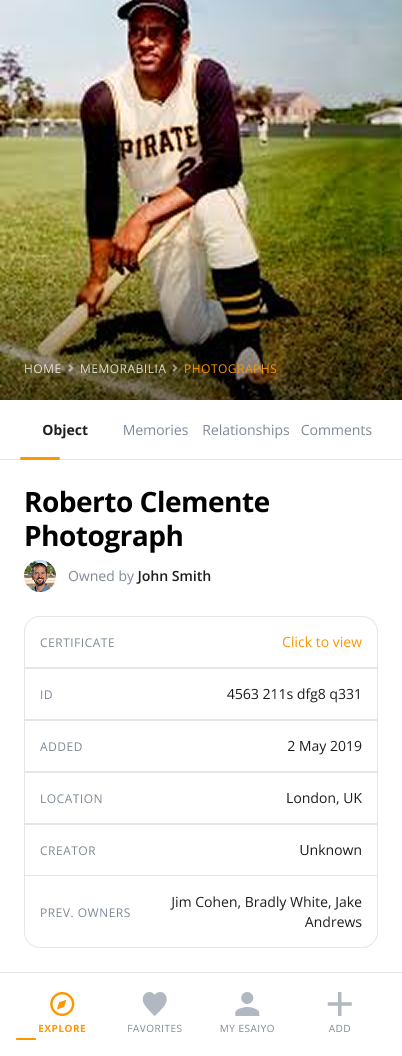
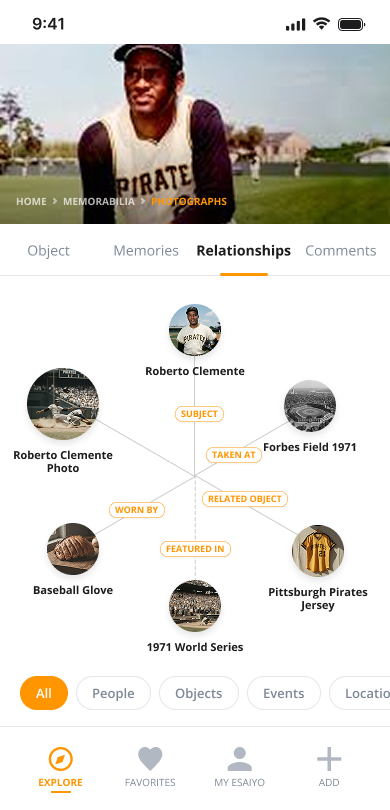
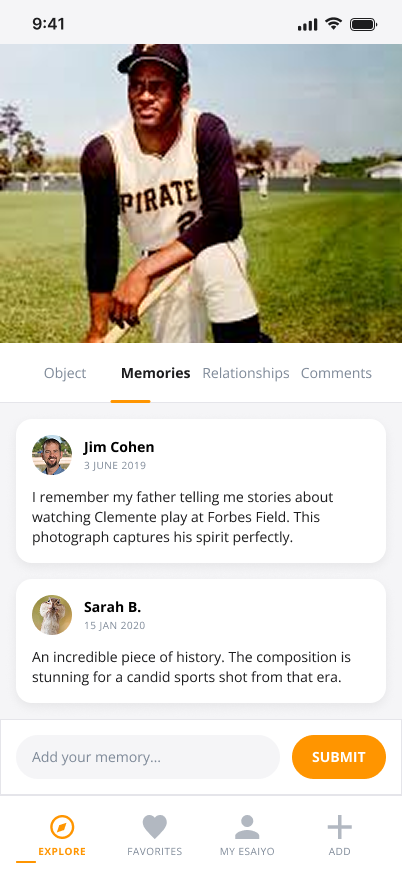
Object story detail — Storyteller persona
My Role
I ran expert interviews with historians and conservators alongside user research with everyday collectors, which converged on three personas — Storyteller, Collector, Explorer — that anchored every architectural decision from there. The central design bet: rather than forcing a single taxonomy onto radically different asset types, I built an IA flexible enough to let each object's own structure define its presentation, while still sharing one navigation and interaction model across the whole platform.
The Result
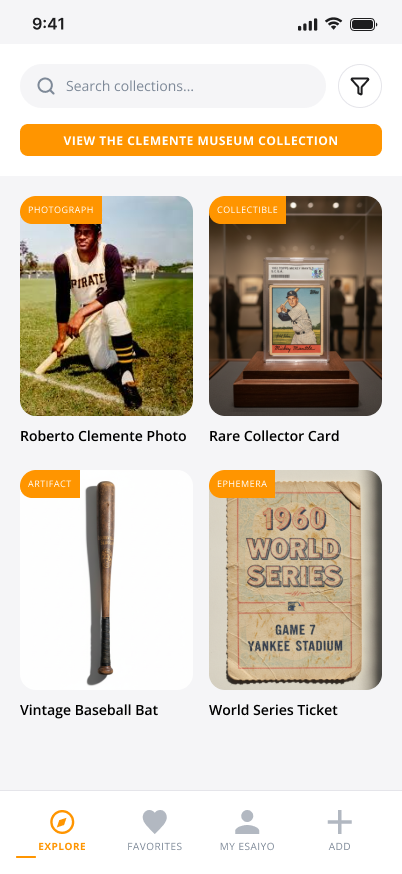
The platform shipped with complete experience parity between web and mobile — the same information architecture, translated rather than compromised across screen sizes. It successfully held emotional storytelling and structured documentation in the same product without either one undermining the other, which was the specific capability the team needed walking into Series A fundraising conversations.